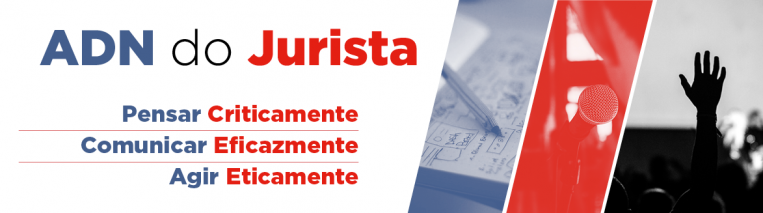
Since its creation in 2012, the ADN Jurista Programme has focused on fostering citizenship and civic empowerment among its students.
Grounded in the idea of the jurist as a problem-solver, the programme has, from the outset, encouraged students to engage with real community issues and to reflect on how to address them, always within the ethical framework that is fundamental to any legal profession.
This combination of contextual awareness (worldview) and the ability to apply legal reasoning within that same context results in the development of three key forms of literacy:
- Political literacy, in a broad sense;
- Media literacy, encouraging regular and critical engagement with the press;
- European literacy, promoting an understanding of the European legal and civic landscape.
In this context:
- In 2015, the United Nations launched its 2030 Agenda for Sustainable Development, outlining 17 Sustainable Development Goals (SDGs).
- That same year, Pope Francis published the encyclical Laudato si’, calling for an integral ecology and a global shift towards a more inclusive, sustainable approach to economic, energy and environmental policy.
- In 2021, the Universidade Católica Portuguesa presented its Strategic Development Plan 2021–2025, identifying Pedagogical Innovation (1.4) and Citizenship and Public Policy (3.4) as key areas of strategic growth.
The ADN Jurista Programme embodies these dimensions by actively promoting the personal and professional development of its students in alignment with the United Nations Sustainable Development Goals, particularly through four SDGs, as outlined below.
(Click on each goal to learn how the ADN Jurista contributes to its achievement).
ODS5 - Gender Equality
• Ensure women’s full and effective participation and equal opportunities for leadership at all levels of decision-making in political, economic and public life;
• Adopt and strengthen sound policies and enforceable legislation to promote gender equality and the empowerment of all women and girls at every level.
In the ThinkLink group sessions, students are presented with real-world community challenges and invited to propose solutions. For this particular goal, one session focuses on gender-based pay inequality, where students deepen their understanding of the issue, design policy responses and anticipate the possible implications of their proposals.
ODS8 - Decent Work and Economic Growth
By 2030, achieve full and productive employment and decent work for all women and men, including young people and persons with disabilities, and equal pay for work of equal value.
During ThinkLink group sessions, students analyse a draft law proposal on parental leave, reflecting on its implications for gender pay disparities and confronting their own preconceptions about equality in the workplace.
In the ThinkLink individual sessions, students explore the topic of social inclusion income, whether it acts as an incentive to inactivity or as a tool for inclusion. They examine relevant regulations, build structured arguments, anticipate counterarguments, and refine their reasoning competences in accordance with the programme’s critical-thinking framework.
ODS10 - Reduced Inequalities
• By 2030, empower and promote the social, economic and political inclusion of all, irrespective of age, gender, disability, race, ethnicity, origin, religion, economic status or any other condition.
In the context of ThinkLink group sessions for this SDG, ADN students address two complex community challenges:
- The 2018 European Council decision on how the EU should shape its migration policy, approached through a role-play simulation, with students representing countries such as Hungary, Italy, Germany and Greece;
- The European Commission’s 2017 White Paper, “Road Map to Europe”, analysing how EU Member States can strengthen European integration following the subprime crisis, sovereign debt crisis and Brexit. Students again engage in role-play, debating scenarios involving the single market, monetary union, migration and security, foreign policy and defence, and the EU budget.
ODS16 - Peace, Justice and Strong Institutions
• Substantially reduce corruption and bribery in all their forms;
• Ensure responsive, inclusive, participatory and representative decision-making at all levels;
• Guarantee public access to information and protect fundamental freedoms, in accordance with national legislation and international agreements.In ThinkLink group sessions, students explore the media perception of corruption in Portugal compared with international data and rankings. When discussing the criminalisation of illicit enrichment, they analyse Constitutional Court rulings and are challenged to propose legally consistent solutions.
Through gamified learning, ADN students also participate in an online simulation game where they assume the role of disinformation agents. This exercise helps them understand how false information can bypass traditional media scrutiny and threaten democratic systems.
In ThinkLink individual sessions, students reflect on the “whistleblower status” of Rui Pinto within the framework of the EU Directive on anti-corruption and money-laundering, considering its potential impact on justice and criminal investigation systems.
Also individually, ADN students are encouraged to explore their own political positioning, reflecting critically on topics such as the role of the State in regulating community relations, openness to migration, and the participation of the private sector in areas such as health, education and the environment.
In the run-up to national and European elections, students examine party manifestos, watch political debates and identify different types of fallacies and rhetorical manipulation, developing awareness of how argumentation operates in the public sphere.