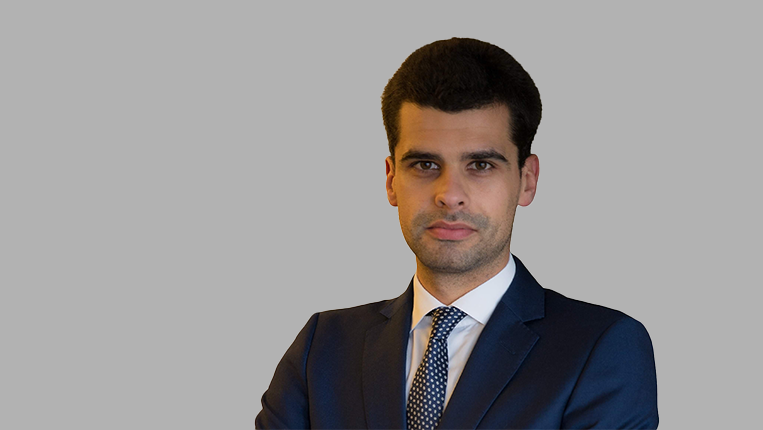


João Sampaio Costa is 22, from Guarda, and an undergraduate Law student at the Porto Faculty of Law, Universidade Católica Portuguesa. He founded CLEAF — Clube de Literatura, Escrita, Arte e Filme (Literature, Writing, Art and Film Club), an academic group that brings together students who want to explore different dimensions of Culture. Next stop? Japan, on international mobility.
Why did you choose to study Law?
I chose Law, although I was also excited by Political Science and International Relations. At heart, what interests me across these areas is how people organise themselves in society, whether through processes or institutions.
Within Law, which areas have captured your interest the most?
Intellectual property, especially copyright. Maybe because I write a lot myself. I’m interested in understanding how I can protect my work, and the work of other authors and artists.
“ADN Jurista is an innovative programme at Católica.”
Next semester you’ll be going on international mobility.
I’m going to Japan. Japanese culture fascinates me. I read manga, watch anime, and all the origami you see around campus were made by me. Japan has a very distinctive culture, and the philosophy associated with it is one of the things that interests me most, part of the reason I want to go. I’ll be taking modules more closely linked to philosophy and the arts, literature, and creative writing.
What’s the first thing you’ll do when you arrive in Japan?
Dress up and try sake! I’m very curious about it, it’s a traditional Japanese fermented alcoholic drink.
You founded the Literature, Writing, Art and Film Club (CLEAF). What is it?
The club had been in the works for some time, but it officially started this semester. The main goal is to bring together people who care about these areas. CLEAF is an academic group designed as a welcoming space for anyone who wants to talk about, and share Art, Literature, Cinema, and other forms of Culture. I’ve always been involved in academic groups, and I felt there was room at Católica for a club like this.
What kind of activities will CLEAF offer?
We’ll organise reading clubs, workshops on Portuguese poetry, sonnets, and even Japanese poetry. There will also be a platform where members can publish their own texts and poems. We’ll run workshops on origami, painting, embroidery and modelling, and we’d like to host screenings of selected films as well. We’re genuinely excited about CLEAF’s potential. We’re glad to contribute to something we believe matters, and to promote something worthwhile that can have an impact at Católica and for its students.
Where does your interest in culture and the humanities come from?
My father is my greatest influence. He has painted from an early age and always lent me books. And if there was a book I wanted that he didn’t have, he wouldn’t rest until he found it for me. Even though his professional field is industrial management, he’s deeply connected to the arts, painting, drawing and modelling.
What sets Universidade Católica apart?
Close, hands-on learning. Our Professors are always challenging us, and they stay closely involved in supporting us throughout our journey.
You took part in the ADN do Jurista programme. How has it shaped your path?
AND do Jurista is an innovative programme at Católica that helps students become effective people. We work on posture, speaking, the way we write, and how we present and argue. These skills are useful in the classroom, but they’re especially useful for life beyond it. It made a real difference to my academic journey, and I’m grateful that Católica invests in programmes like this.
“What drives me is the desire to change the world.”
You’ve also been involved in other academic groups, such as the Debating Society. Why is student involvement so important to you?
I believe I can’t do much on my own, no matter how competent I may be. I believe in the strength of the collective, that’s what student involvement is about. I like seeing a shared goal mobilise a whole team. Exceptional solutions can come from teamwork. As a team, results last; they gain strength and meaning.
Plans for when you return from Japan?
I want to pursue a Master’s in Law here at Católica and specialise in intellectual property, cybercrime and technology. Whether I’ll become a lawyer, a judge, or choose another path such as consulting, I don’t know yet. I’ll take those questions with me to Japan. What I do know is that, whatever it is, it needs to challenge me, and push me to read, study and research.
What drives you?
The desire to change the world and make an impact in some way.
Influential books?
The Book of Disquiet (O Livro do Desassossego), by Bernardo Soares (Fernando Pessoa), had a strong impact on me. My all-time favourite book is Zen and the Art of Motorcycle Maintenance, by Robert M. Pirsig. I’ve read it around five or six times. It follows a motorcycle journey across the United States between a father and son, an essay on the beauty of riding. Inspired by it, I’ve just started working towards my motorcycle licence (laughs).
Note: This interview was originally conducted in Portuguese. AI translation technology was used to produce the English version, which was then edited to preserve the author’s intent, tone and meaning as faithfully as possible.
Pessoas em Destaque é uma rubrica de entrevistas da Universidade Católica Portuguesa, Centro Regional do Porto.